



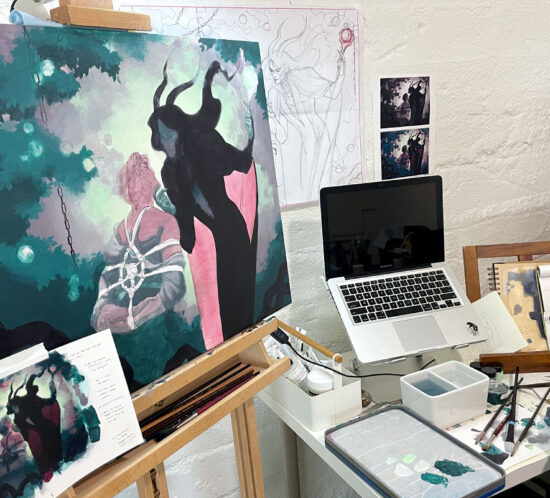
Painting “The Thrall” – (Role) Playing With Fire
“The Thrall” was completed in a flurry of deadlines last summer over a series of long nights. Shortly after handing over the painting and the opening of the show, I hopped on a plane for an international trip and forgot about all the process photos and notes I had diligently taken while painting. Luckily, I found it all while digging through my photos to clear space from my phone’s memory. So, though it’s been some time, I thought I’d share some of my process and my thoughts that went into this painting with you.
When I received the email invitation for the “Dungeon Party” exhibition at && gallery I’d initially considered turning it down. I read over the theme which celebrated the exploration of of LGBT identity through role playing games. But the extent of my DND/tabletop experience is of listening to podcasts and playing Baldurs Gate 3. I didn’t want to be disingenuous in telling a story of self-discovery that was not mine. Then I read one of the last lines in the email: “So essentially we are looking for fantasy themed artwork that may even delve into the sides of kink and bdsm”. This sparked understanding, because though RPG table top games was not a specific part of my story, storytelling and role play was.
There’s freedom in the ability to step away from yourself. To play with an identity just to try it on for the fun of it. And sometimes through the adventure you trip over a profound truth, and suddenly find yourself face to face with a desire or identity that you hadn’t known was there. The discovery of your authentic self can be terrifying, at least it was for me. Enough to think “Well, I’ll just lock this away and never ever tell anyone ever.” Healthy, I know. But I’m not sure I would have broken out of the mindset unless I had been able to play it out with people I trusted.
The parallel of kink and identity with this type of play, is that it gives you a safe space to play with a role that might otherwise feel (or literally be) unsafe. Stories we create for ourselves don’t need to reflect a social expectation, or moral. They don’t need to have a story arc, a redeeming ending, or even an ending at all. We can replay the scene we want in our head over and over just to chase the way it makes us feel. Fantasy gives a perfect backdrop by allowing anything (or anyone) to “be” without the “because”.
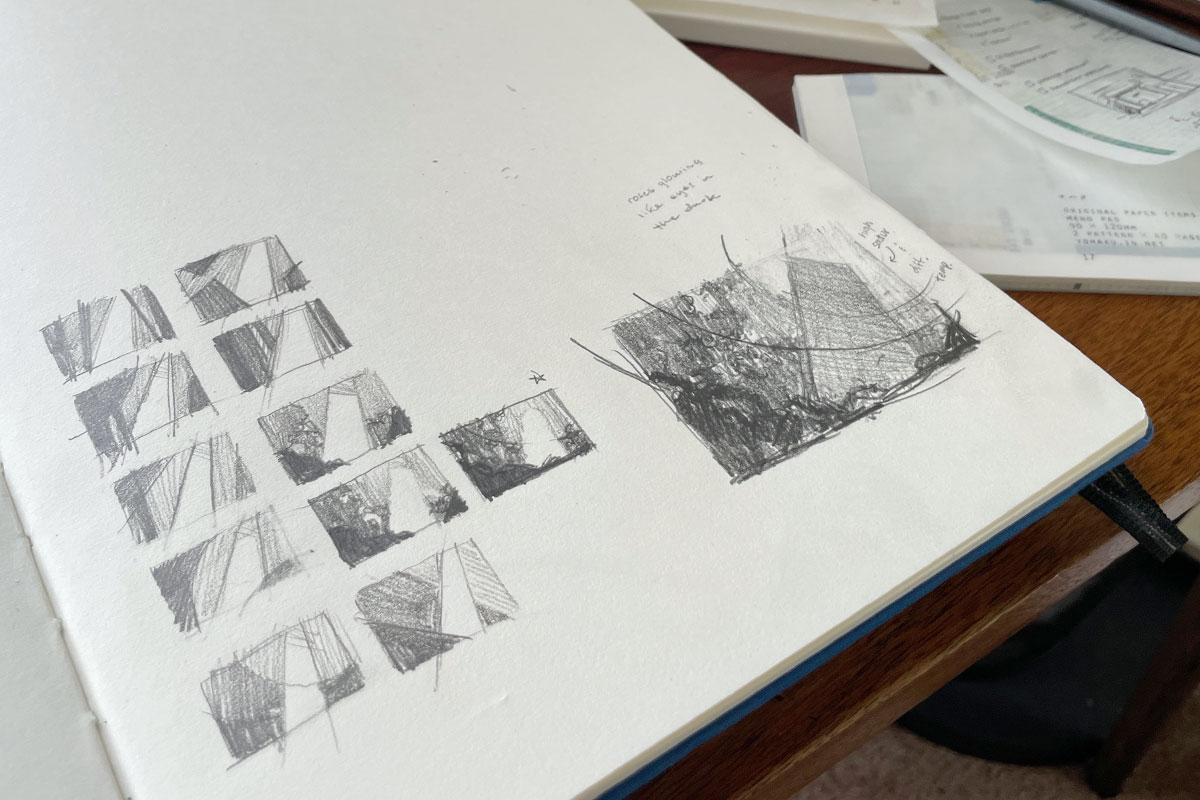
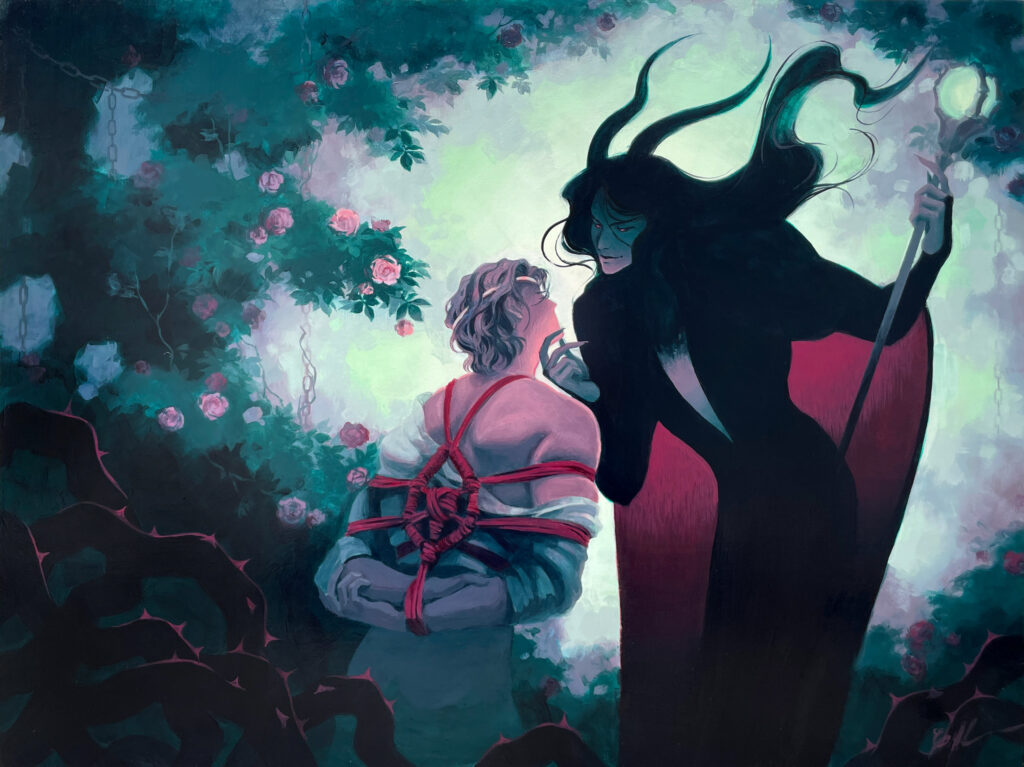
The fantasy of “Thrall” is inspired by the popular mouse corp movie Sleeping Beauty. The dark figure on the right, our “dragon” being particularly inspired by Maleficent. The 1959 film is extremely straight forward, dividing the characters solidly in roles of “good” and “evil”. But despite the classic gender roles and symbolism, the movie stood out to me because the villain does not capture the princess. In fact, after Aurora’s magically induced narcoleptic episode, it’s Prince Philip who is captured, bound in rope and dragged away to the castle of the visibly delighted Maleficent. For some reason, whenever I bring up this scene I seem to be the only one who remembers it, which says more about me I guess. My painting pulls its inspiration from this facet of the movie. The story of a broad shouldered hero, bound and enraptured by a dragon’s spell.
Every painting has it’s own challenge, for Thrall the most difficult aspects were the colors and lighting. I wanted to create a feeling of sinister magic throughout the atmosphere. Magic in visual media is often communicated by glowing lights, sparkling effects, or bright saturated colors. I wanted the environment to feel like a mirage created with magic, but didn’t want it to look bright or sparkly. It was supposed to be a dark lair after all.
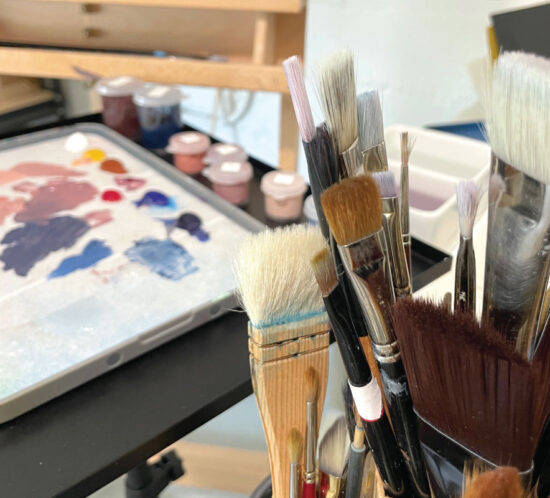
So I opted to lean on complementary colors to create feelings of vibration and energy. I created a digital color study, where I mixed in neon green tones into the background to imply an alchemical glow. Then paired it with muted red and pink tones to emphasize the contrast and vibrancy. Then from the digital version I made a traditional color study, where I focused on color mixing and techniques for the effect I wanted.
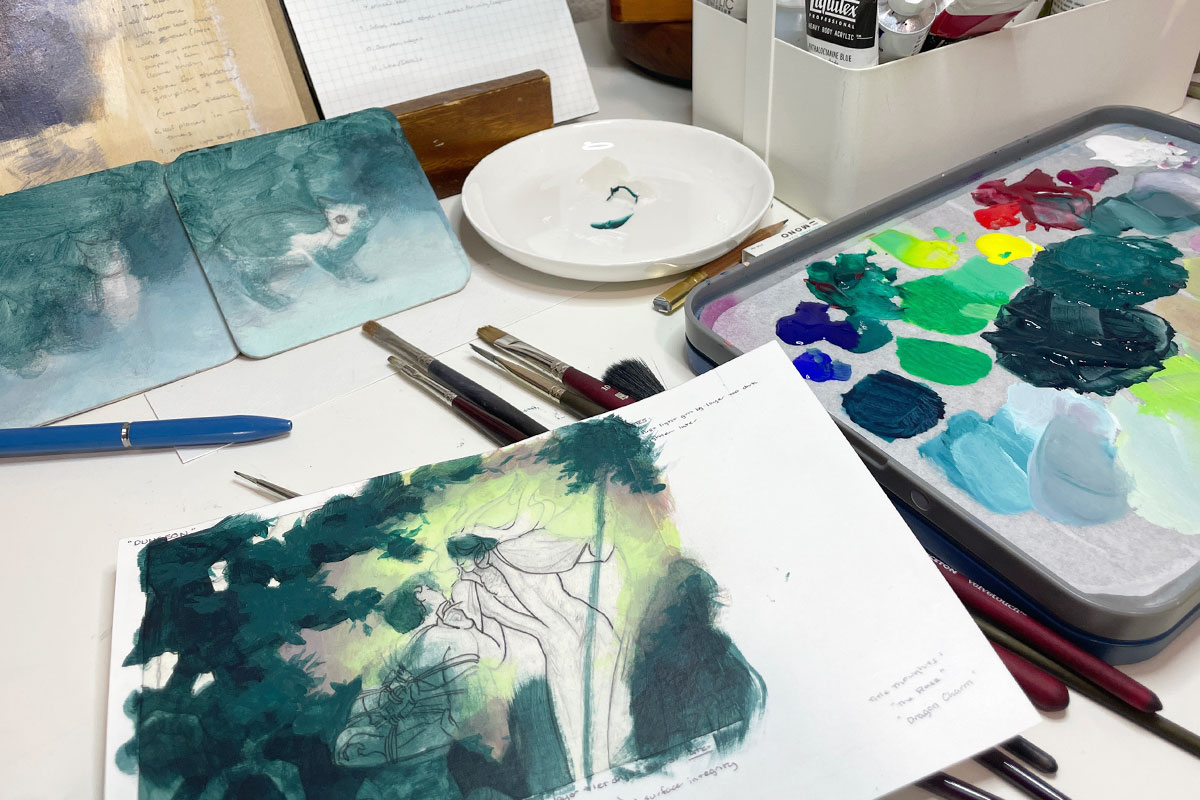
The coasters for Nucleus Portland’s “Salut!” show last year were due around the same time so I planned them to have bushy greenery like the background for Thrall, it was helpful as practice for the layered foliage.
On the canvas I started by painting gradients and more loose background layers. The atmospheric depth and brush were layered in first- gestural and blurry. I moulded the layers from background to foreground, gradually defining the shape and depth with each layer to blend the background into the greenery, as if disappearing into a haze or dream.
I’m sure many creatives reading this will empathize when I mention the “ugly” stage in my process. The foundation layers of colors and forms, floating indecisive without the context and details to ground the image, always make me question all of my decisions. It’s by gritting my teeth and trusting my color study and experience that I am able to press on. But let me tell you… this ugly phase was a long one.
The colors I picked are purposefully saturated, deviating far from natural greenery in daylight to imply an unnatural source. The unnerving discomfort of which worked a little too well. These colors work in context with each other but as I layered them individually, looked concerningly off-putting. But my color study reassure me: “Yes, this is the right shade of mold green. It may look hideous right now, but it will look different with the rest of the colors later… probably.”
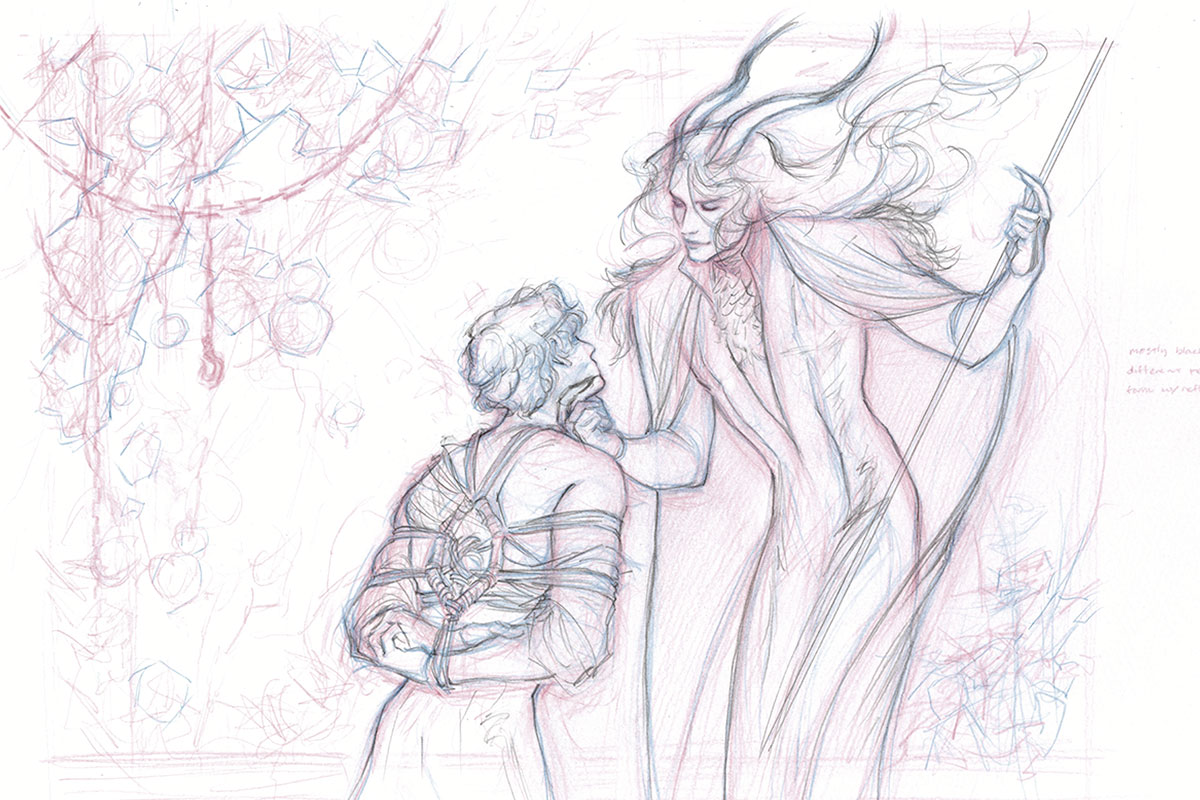
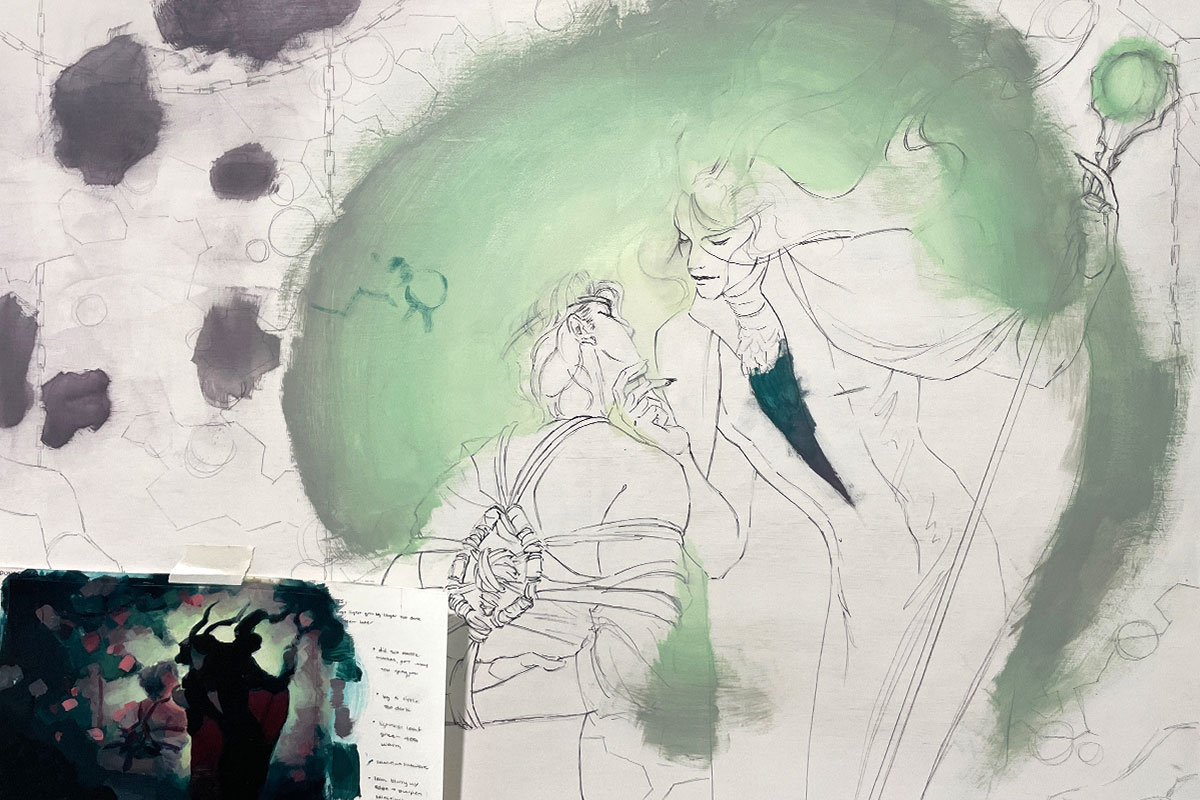
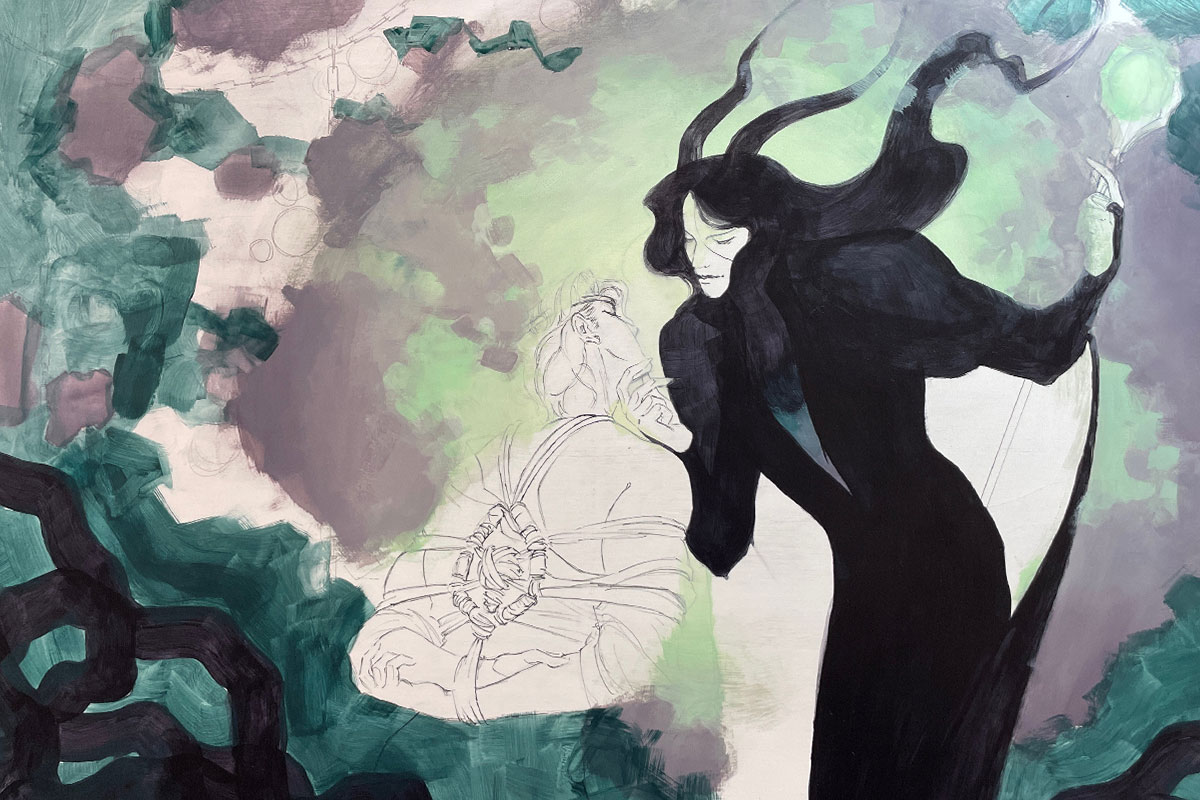
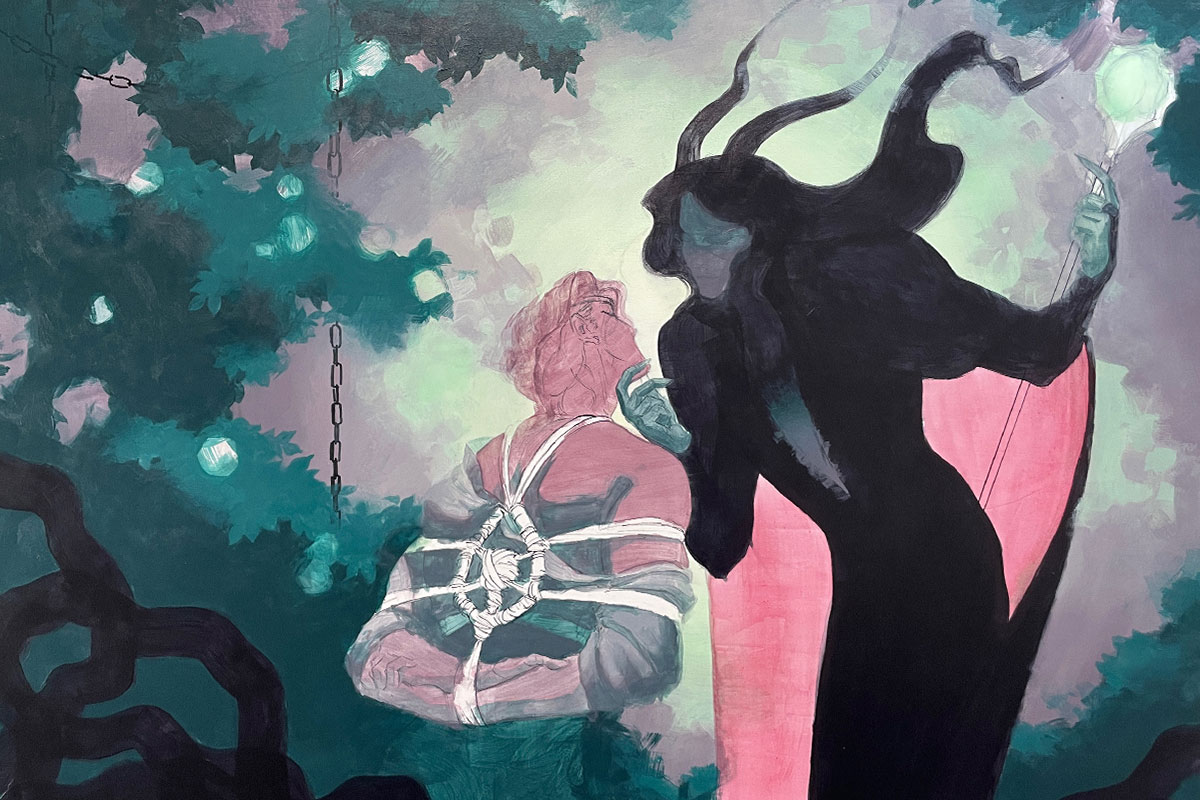
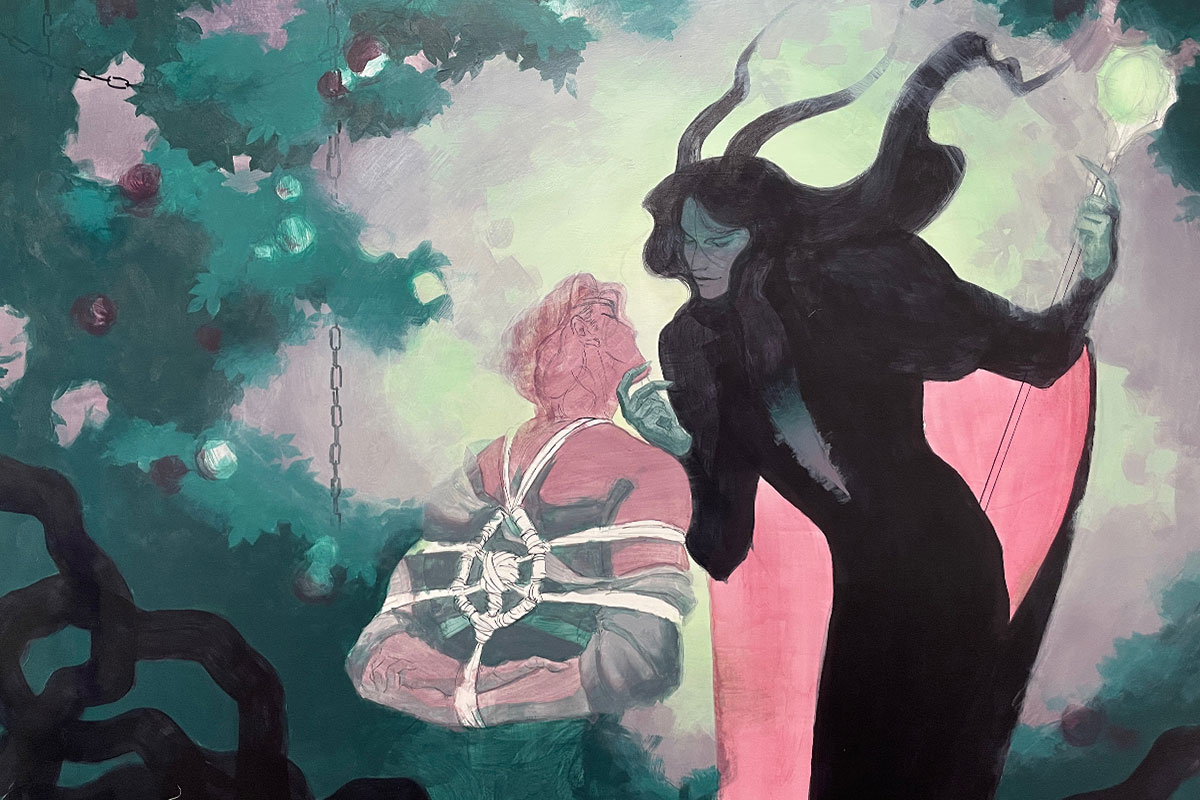
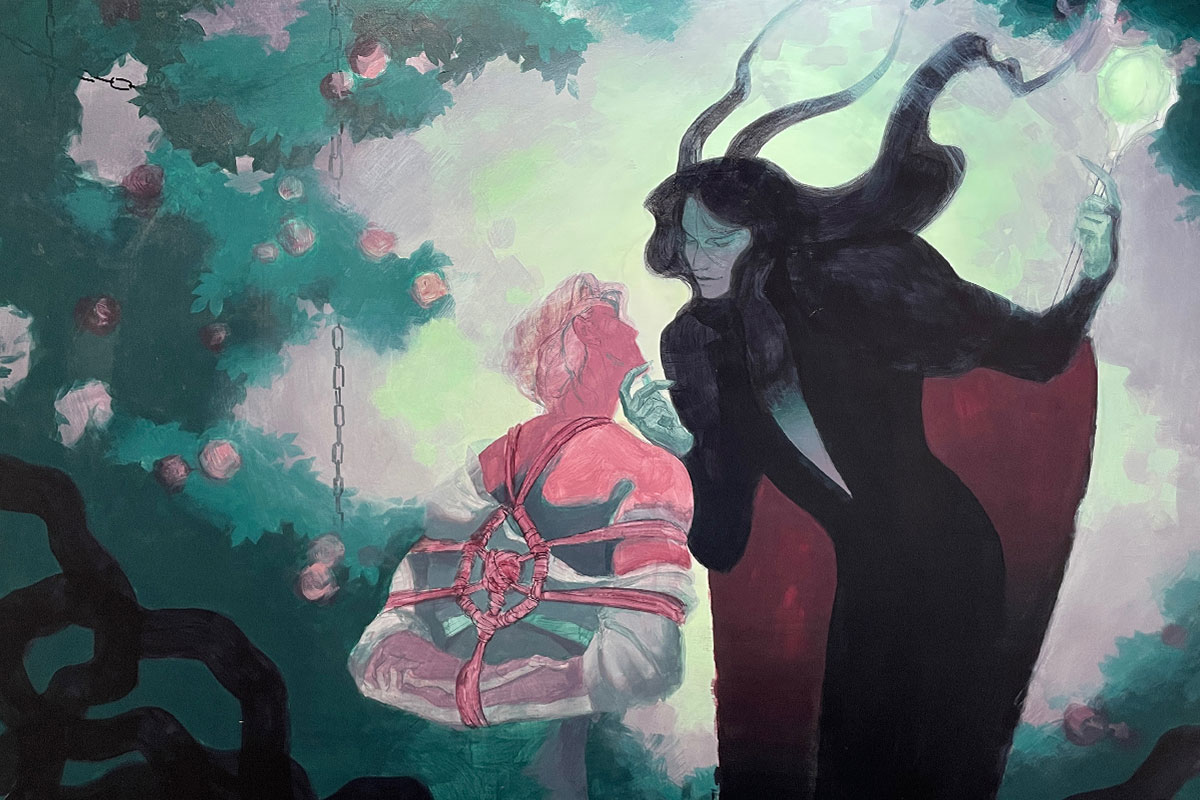
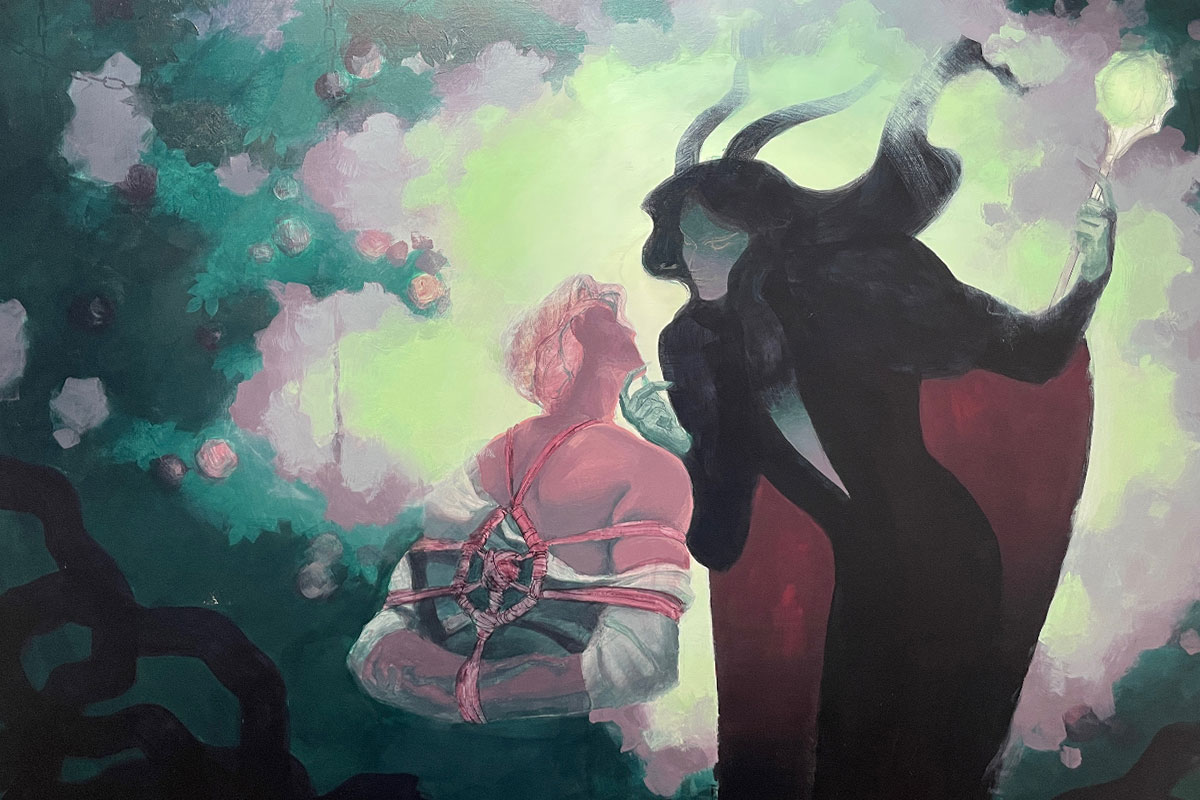
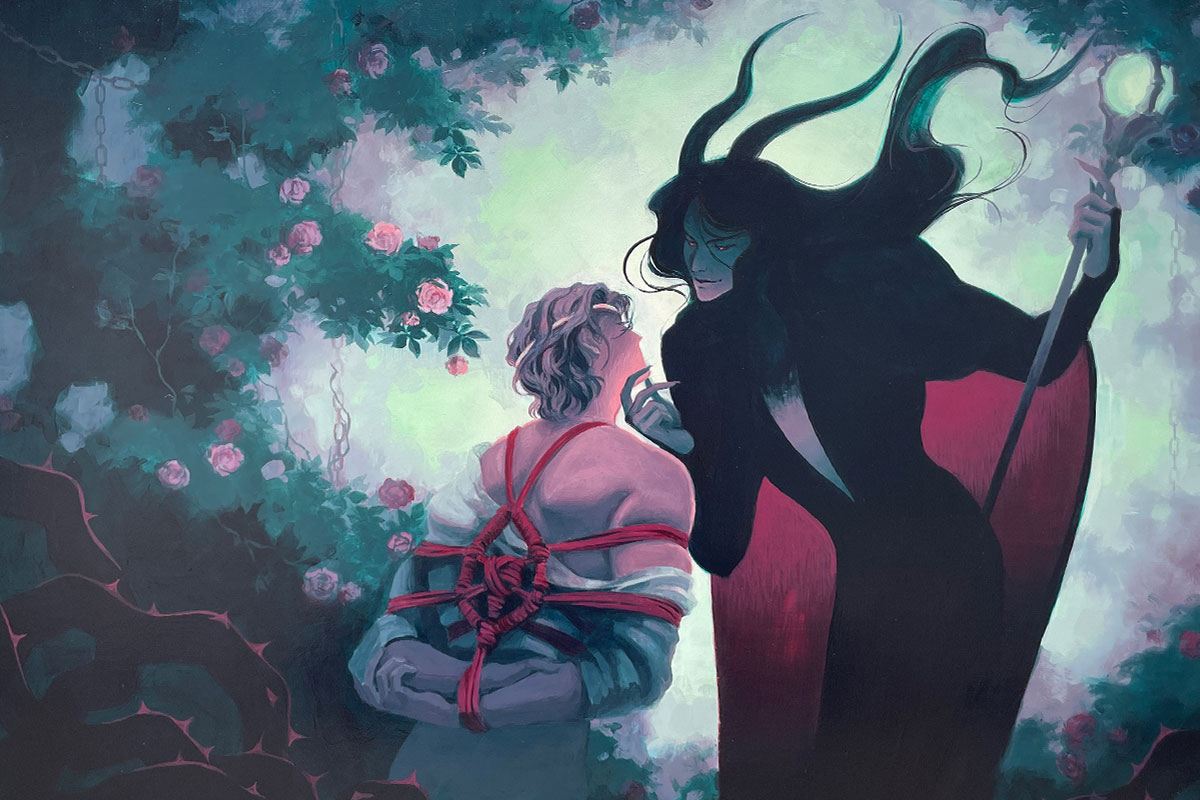
With effort, I managed to persevere in my trial of mental endurance (unlike our captive hero). After countless layers- it finally looked the way I wanted: eerie and suspicious- but in a good way. A discomfort or wrongness that draws you in to the roses, the ropes, and the dragon. Finding the balance was a long process, but I managed to finish just in the nick of time.
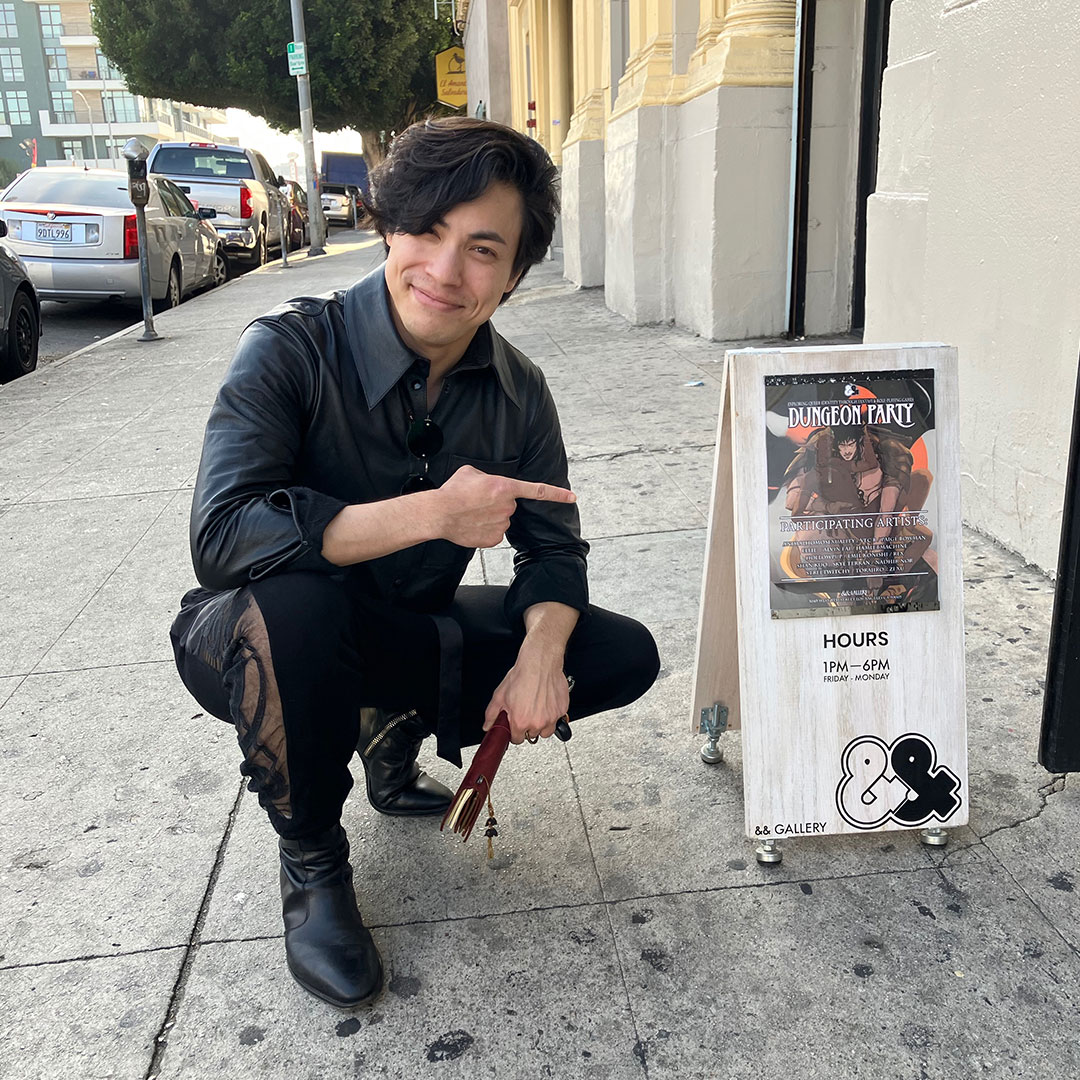
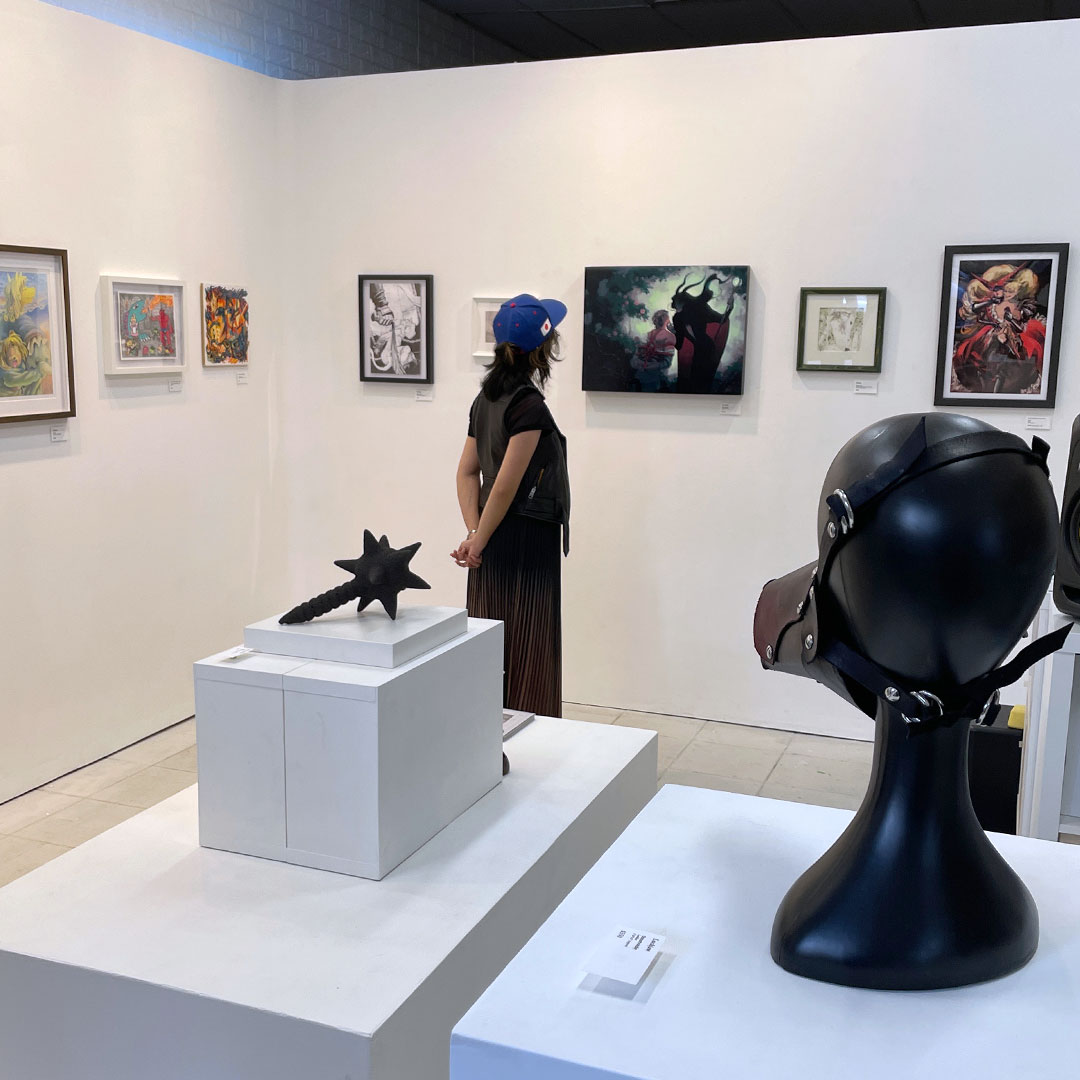
The Dungeon Party show was intimate and fantastic, with a varied roster of artists. Edie, the owner of && Gallery, did a wonderful job of curating the show and displaying the works. The many styles worked to give different insights to each artists rendition of the theme. I particularly liked this line from the show description, and felt it captured the heart of the exhibition well:
“Dungeon Party does not draw a straight line from dice to dungeon— but instead invites the viewers consider the roles we choose, the myth we rewrite, and the freedom we find when we turn the act of play into an act of becoming.”
— && Gallery
As kids we’re told stories full of figures to relate to and learn from. Characters we “should” aspire to be are made clear to us. Heroes, survivors, love interests, princes and princesses, the “one” who survives the odds where all others fail. Because who would want to be the villain, or worse, the one that falls to them? But logic and “should” has no hold over what will resonate with us. We’re drawn to stories that make us feel something, regardless of understanding or the ability to articulate those feelings. Regardless of whether or not it makes sense.
My painting isn’t about the moment of heroism or triumph. It hones in on the grip of helplessness and the tension vibrating in the promise of something terrifying on the horizon. Taking the hero and casting them as the victim at the dragon’s mercy, tension and danger turn into intimacy. Beautiful in suffering, beautiful in inflicting it, and the guilty pleasure of enjoying danger precisely because you “shouldn’t”.
Comments
-
-
Emil
Thank you Judi! I’m happy to hear that- writing about my own process is interesting. It’s only when sharing with other artists that I notice some of the things I do intuitively are so different from others.
-




Judi Delgado
Fantastic “peek behind the scene”! And the work itself is stunning. Your photos support the text so well also.